
When an unexpected tragedy or severe biological contamination occurs at your Central Texas property, dealing with the financial aftermath can feel overwhelming. Many property owners and estate representatives in Williamson County are relieved to learn that standard homeowner's and commercial property insurance policies frequently assist with the burden of professional remediation.
Unattended Deaths and Discovery Delays
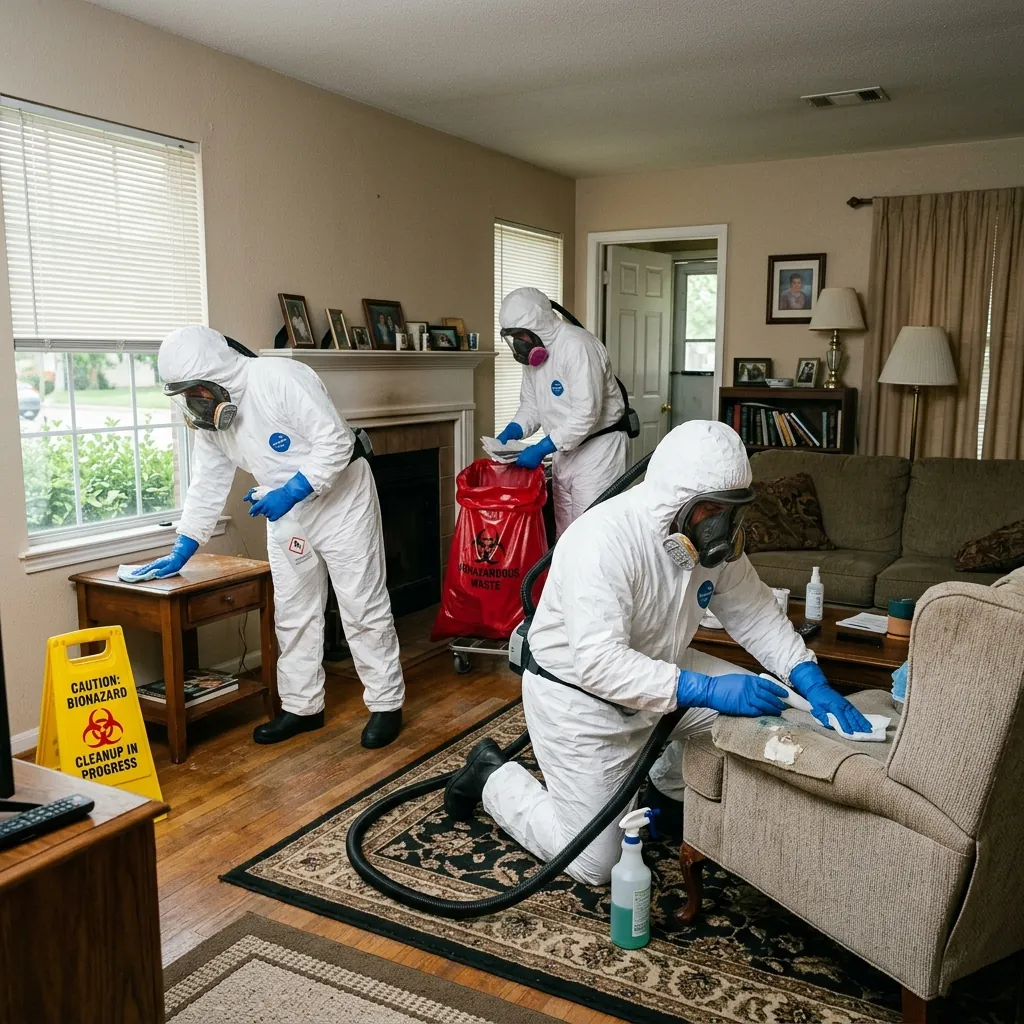
One of the most frequent situations that triggers an insurance claim for biohazard work is an unattended death. In communities like Sun City Georgetown or scattered single-family homes throughout Williamson County, an individual may pass away and remain undiscovered for several days or weeks. During this time, biological fluids naturally break down and penetrate deeply into porous materials like carpeting, carpet padding, and subfloors.
Because the resulting structural damage is considered sudden and accidental, many policies cover the necessary remediation. The coverage generally pays for unattended death cleanup, the safe removal of contaminated materials, and the extensive thermal fogging or hydroxyl treatments required to eliminate lingering decomposition odors.
Crime Scene and Trauma Cleanup
Following a violent crime or severe accident, the police and medical examiners will process the scene and eventually release the property back to the owner. It is a common misconception that the city or county handles the cleanup. In reality, the responsibility falls squarely on the homeowner or business owner.
Fortunately, property insurance often covers crime scene cleanup. This includes neutralizing bloodborne pathogens, removing hazardous waste, and preventing cross-contamination from spreading into unaffected rooms. When our technicians respond to these sensitive situations, we carefully photo-document the affected areas before removing any drywall or flooring to ensure the insurance adjuster has clear evidence of why the structural removal was necessary for safety.
Sewage Backups vs. Biohazards
While blood and bodily fluids are universally treated as biohazards, raw sewage backups represent a gray area in insurance coverage. Standard homeowner policies sometimes exclude sewage and water backups unless a specific rider was purchased. However, if covered, the cleanup of Category 3 "black water"—which contains dangerous biological pathogens—requires the exact same rigorous disinfection and disposal standards as a trauma scene.
How We Support the Claims Process
Filing a claim for biohazard damage is fundamentally different than filing a claim for a broken window or wind damage. Adjusters rely heavily on expert documentation because they rarely want to walk into a biologically contaminated environment to inspect the damage themselves.
When you hire our Georgetown biohazard remediation team, we essentially bridge the communication gap between you and the insurance company. We provide itemized scopes of work, line-item billing using industry-standard software, and proof of regulated waste disposal. In many cases, once you pay your deductible, we can work directly with the carrier to resolve the remaining balance, allowing you to focus completely on your family and emotional recovery.
Frequently Asked Questions
Will insurance cover the cost of replacing my contaminated carpet?
In many cases, yes. The insurance claim is typically divided into two parts: remediation (the safe removal of the biohazard) and restoration (putting new carpet or drywall back in). We handle the remediation phase and provide documentation to justify the replacement to your adjuster.
Do I have to use the cleanup company my insurance recommends?
No. By law, the property owner has the absolute right to choose whichever licensed remediation company they prefer. You are not obligated to use the insurance company's preferred vendor list.
Are hoarding cleanups covered by insurance?
Generally, general clutter and hoarding cleanup is not covered by insurance because it is considered a gradual maintenance issue rather than a sudden, accidental event. However, if a sudden biohazard event occurs within a hoarded environment, portions of the cleanup may be covered.
How does payment work if I file a claim?
Typically, the homeowner is only responsible for paying their policy deductible upfront. Once coverage is verified, our company can usually bill the insurance carrier directly for the remainder of the remediation services.
Will filing a claim make my premiums go up?
While we cannot guarantee how an individual carrier will respond, biohazard incidents are generally "no-fault" claims (unlike a car accident you caused). You should discuss the specific impact on your premiums with your insurance agent.